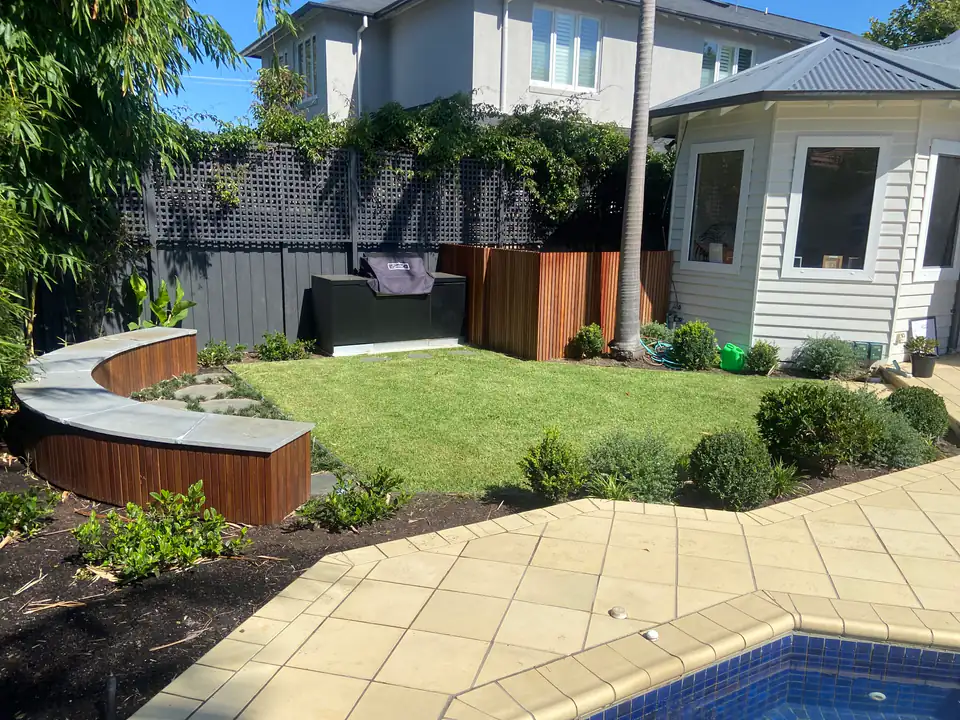
A good hedge is dense from top to bottom, holds a clean shape, and stays healthy year after year. Most of that comes down to three things: trimming at the right time, trimming often enough, and shaping it correctly.
When to trim hedges in Melbourne
- Spring: the main growth flush. Give formal hedges their first trim once new growth has hardened slightly.
- Summer: light shaping trims to keep lines crisp. Avoid heavy cuts in heatwaves, as newly exposed leaves can scorch.
- Early autumn: a final tidy trim so the hedge goes into winter looking sharp.
- Late winter: the best time for hard renovation of overgrown broadleaf hedges, just before spring growth.
Trimming common Melbourne hedges
| Hedge | Best for | Trimming notes |
|---|---|---|
| Buxus (English box) | Low formal borders, parterres, topiary | Trim after the spring flush and again in late summer. Avoid trimming in hot, sunny weather, and keep an eye out for leaf spotting or dieback. |
| Murraya | Formal hedges with scented flowers | Trim after each flush of flowers from spring to autumn. Responds well to regular light trims. |
| Lilly Pilly (Syzygium) | Privacy screens and tall hedges | Two to three trims a year. Regular trimming also removes new growth affected by psyllids (pimply leaves). |
| Photinia | Screens with red new growth | Frequent light trims encourage the bright red new foliage. |
| Viburnum | Fast, dense screening | Grows quickly - usually two to three trims a year to control height and width. |
| Westringia (coastal rosemary) | Coastal and low-water hedges | Light, regular trims. Avoid cutting back into old bare wood, which may not reshoot. |
| Cypress and conifers | Tall screens | Trim little and often. Never cut into brown, leafless wood - most conifers won’t regrow from it. |
How to trim for a dense, healthy hedge
- Keep the base wider than the top. A slight taper (called a batter) lets light reach the lower branches, so the hedge stays full to the ground.
- Use string lines for formal hedges. A taut line keeps the top and sides dead straight.
- Trim little and often. Regular light trims build density; occasional heavy cuts leave gaps.
- Use sharp, clean blades. Clean cuts heal faster and look neater.
- Feed and water afterwards. Especially in summer, a drink and a feed help the hedge recover.
Renovating an overgrown hedge
If a hedge has become too tall, too wide or bare at the base, renovate it in stages rather than all at once. Cut back the top and one side in late winter, let it recover through the growing season, then do the other side the following year. Feed and water well throughout. Most broadleaf hedges respond well; conifers generally don’t regrow from bare wood, so they may need replacing instead.
Coastal gardens
Near the bay, salt wind burns many hedges. See our guide to drought-tolerant plants for Bayside for tougher options.
Rather leave it to the professionals? See our hedge trimming and topiary service.